New Products
Product Showcase
Quick navigation
 MORE
MORE  MORE
MORE  MORE
MORE News
-
-
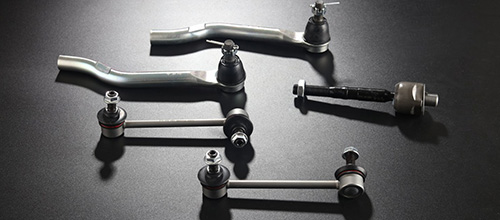
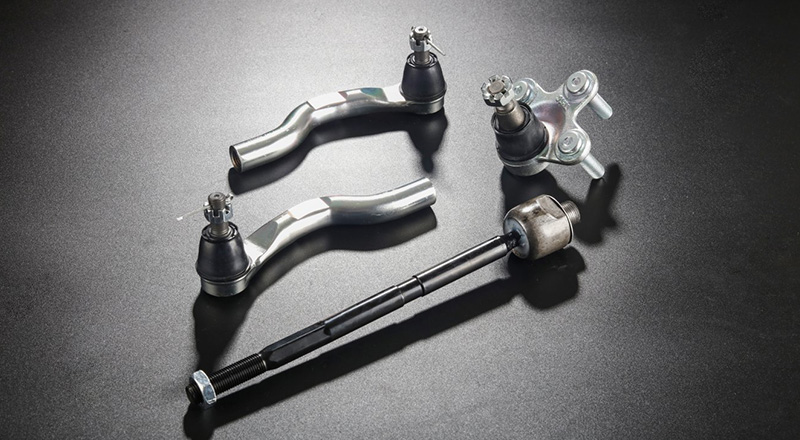
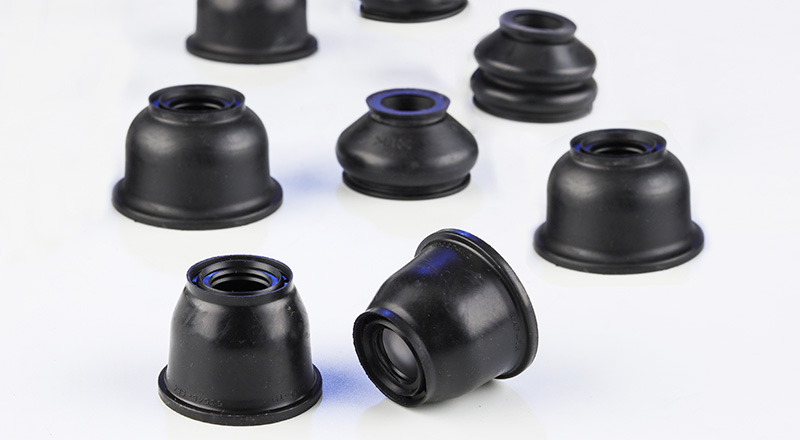
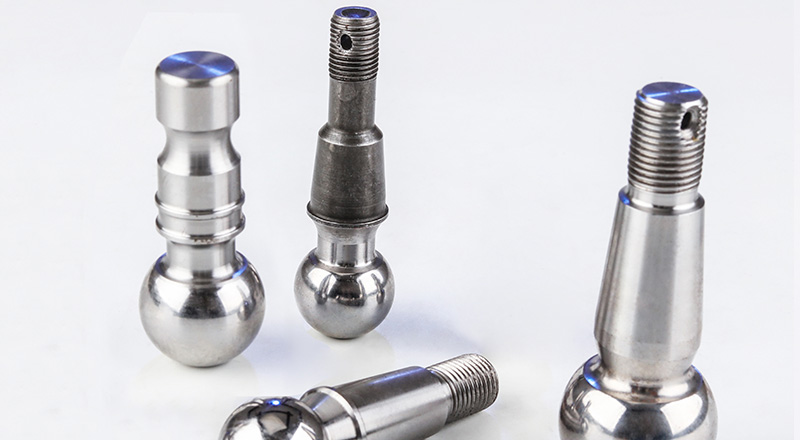
What is a pull rod ball head? Key load-bearing components in automotive steering systems The tie rod ball joint is the core active joint that connects the tie rod and steering knuckle in the automotive steering system, and belongs to a typical ball and socket articulated structure. It consists of a ball head pin, ball seat, sealing cover, and grease chamber, responsible for accurately converting the rotation of the steering wheel into left and right wheel deflection, and absorbing multi-directional impact forces on bumpy roads. When working, it needs to withstand axial thrust, radial shear, and torsional stress simultaneously, so the material is mostly forged from alloy steel, with high-frequency quenching treatment on the surface and long-term lubrication with high-temperature resistant lithium grease. If the ball head is loose, it will directly lead to misalignment, tire wear, increased steering virtual position, and even high-speed oscillation - these are not small problems, but key details related to whether every turn is stable and every lane change is reassuring
Friends who have driven the old Jetta King know that the chassis of the 99-12 models is solid, but the rubber lining of the original ball joint is prone to aging and the metal spherical surface is slightly worn after prolonged use. The steering feel will gradually become "floaty", especially when passing speed bumps where a slight "clunking" sound can be heard. After replacing with the compatible pull rod ball head, it clearly feels more streamlined and directed as if it has been gently "held", without shaking or bouncing. The vibration when passing through the pit is also much softer. The ball head body is heavy and the coating is evenly coated with metallic cold light. After installation, it fits tightly and the sealing cover is pressed tightly without any oil leakage hazards. The materials used are solid, not the kind of lightweight goods that sway with just a twist ✅。 For old Jetta owners, this is not about replacing parts, it's about restoring the steering wheel to its original sense of stability
...-
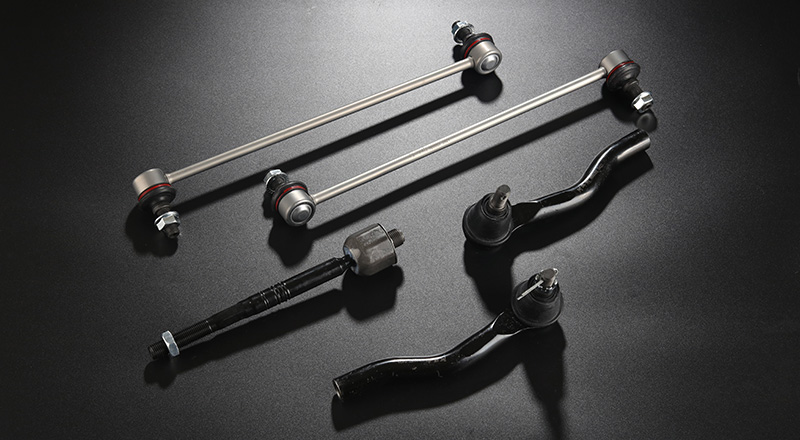
Where is the ball joint of the car pull rod located? The pull rod ball head of a car is usually located on the inner side of the guide wheel. Its main components include tie rods and straight rods, both of which are connected by ball joints. The main function of the tie rod is to adjust the toe in, while the straight rod is used to adjust the operation of the steering wheel.
The state of the pull rod ball head has a direct impact on the steering effect of the vehicle. Under normal circumstances, if the rubber sleeve of the ball head is not damaged, the grease is not dry, the ball head itself is not loose, and the pull rod has not been deformed by collision, then there is no need to replace the pull rod ball head.
Every time you perform car maintenance, you should carefully check the condition of the pull rod ball joint. The pull rod ball head is composed of a pull rod with a ball head shell, which includes a force transmission pull rod that is remotely controlled from below the front wheel of the car and a connected universal ball head.
Inside the ball head housing, there is a ball head with a steering spindle. The ball head is hinged to the edge of the shaft hole of the ball head housing through the ball head seat at its front end. At the same time, the needle roller between the ball head seat and the steering spindle is embedded in the inner hole groove of the ball head seat. This structural design aims to reduce the wear of the ball head and improve the tensile performance of the spindle, thereby ensuring the precision and safety of the vehicle's steering.
...-
文档 图片 12/10000 实时翻译 The core component of the steering knuckle suspension system The steering knuckle, as the core component of the automotive suspension system, connects the wheels and axles and carries important functions. According to different characteristics, steering knuckles can be subdivided into the following categories:
1. Material classification:
a. Steel steering knuckle: widely used, high strength, extremely durable.
b. Aluminum alloy steering knuckle: It has the advantage of lightweight and helps improve fuel efficiency, but the cost is relatively high.
c. Plastic or composite steering knuckles: lighter in weight and lower in cost, but slightly weaker in strength compared to other materials.
2. Structural classification:
a. Integrated steering knuckle: easy to manufacture and install, simple and clear structure, low cost.
b. Separated steering knuckle: The upper and lower parts are manufactured separately and then combined through connectors, making this structure easy to maintain and replace.
3. Classification of driving modes:
a. Front wheel drive steering knuckle: responsible for transmitting power from the front gearbox to the drive wheels.
b. Rear wheel drive steering knuckle: mainly supports the weight of the vehicle and transmits braking force.
c. Steering knuckle for four-wheel drive models: It needs to meet the requirements of front and rear drive and braking, with more comprehensive functions.
4. Vehicle classification:
Different car models such as sedans SUV、 Trucks and other vehicles may use different types of steering knuckles based on their characteristics and requirements. These steering knuckles will be adjusted in design and function to better adapt to the needs of different vehicle models.
...-
What are the components of suspension? The automotive suspension system consists of several key components, as follows:
1. Elastic components, which are the foundation of suspension systems, function to cushion and absorb impacts from the road surface. Usually, springs and rubber pads can be used as elastic components.
2. A damper is placed between the elastic component and the vehicle body, with the main function of reducing vibration to ensure the stability and comfort of driving.
3. Ball joint, which is like a joint in the human body, connects the frame and wheels, allowing the wheels to move flexibly in the vertical direction and better adapt to various road conditions.
4. Steering rod, which connects the frame and wheels, allowing the wheels to turn left and right.
5. Anti roll bar, this lateral linkage device can effectively prevent the body from tilting during vehicle turning, thereby enhancing driving stability.
6. The suspension shaft sleeve is located between the frame and the body, which can effectively reduce friction between the two and further enhance the smoothness of driving.
...-
What is the connection between the car chassis and the wheels? The main components connecting the wheels of a car chassis are the wheel hub, tires, suspension system, braking system, steering system, etc. Here is a detailed introduction:
Car wheel hub. Responsible for connecting the wheels and axles, transmitting power.
Tires. Directly in contact with the road surface, supporting the weight of the car and providing traction.
Suspension system. Connect the wheels to the vehicle body, absorb road bumps, ensure that the wheels always stay in contact with the ground, and provide stable driving performance.
Braking system. Ensure car safety by converting the vehicle's kinetic energy into thermal energy through components such as brake drums or discs, brake pads, and brake fluid, to slow down or stop the car.
Steering system. Enable the driver to control the direction of the car, including components such as steering wheels, steering racks, steering knuckles, and power steering pumps.
These components work together to ensure that the car can travel safely and smoothly on the road.
...-
Do we need to do four-wheel alignment after changing the ball joint of the lever? After replacing the ball joint of the pull rod, it is usually necessary to perform four-wheel alignment.
This is because the replacement of the pull rod ball joint may affect the vehicle's suspension system, causing displacement at the connection. If four-wheel alignment is not carried out, the vehicle may experience problems such as driving deviation, steering wheel misalignment, tire wear, heavy steering, and inability to automatically return. Four wheel alignment includes adjusting parameters such as caster angle, camber angle, front wheel camber angle, front wheel toe in, and rear wheel toe in to ensure good driving performance and reliability of the vehicle.
However, if other chassis components (such as shock absorbers, connecting rods, lower control arms, subframe, etc.) are not replaced during the process of replacing the tie rod ball joint, and the vehicle does not experience any abnormal conditions such as uneven wear or running, then immediate four-wheel alignment may not be necessary. However, for safety reasons, it is best to perform four-wheel alignment after replacing the rod ball joint to avoid potential risks.
...
- About Us
- Company Profile
- Culture
- Equimpent
- Certificate
- Location
- Products
- All products
- Contact us
- Contact Aslan
- Contact us
- +86-576-87228575Hotline
- 12782671@qq.comTell us the problem